


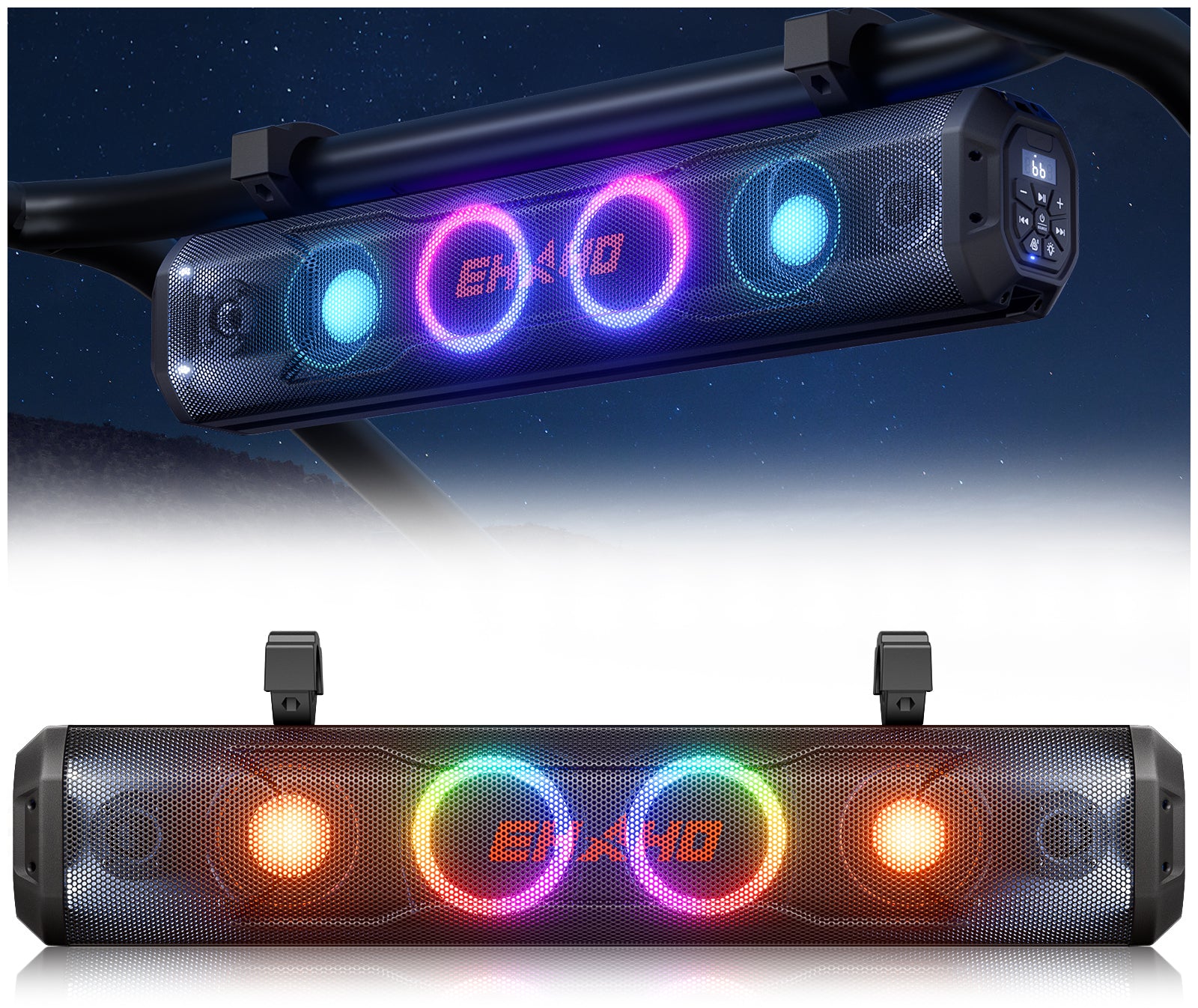


UTV Sound Bar Buying Guide: How to Choose the Best Off-Road Audio System
Introduction
A great off-road adventure is about more than just reaching your destination.
Whether you're carving through desert trails with friends, spending a weekend at a remote campsite, or cruising along scenic backroads, the right soundtrack can elevate the entire experience. Music has a way of turning a good ride into an unforgettable one—but choosing the right audio system for your UTV isn't as simple as grabbing a portable Bluetooth speaker.
A UTV sound bar is purpose-built for the outdoors. Unlike consumer speakers, it's engineered to handle constant vibration, dust, mud, water splashes, and temperature swings—all while delivering clear, powerful sound that cuts through wind and engine noise.
With so many options on the market, it's easy to feel overwhelmed. Riders commonly ask:
-
How much power do I actually need?
-
What size sound bar fits my UTV?
-
How important is a waterproof rating?
-
Should I choose Bluetooth 5.0 or newer?
-
Is installation something I can do myself?
This guide answers all those questions and more. By the end, you'll know exactly what to look for—and how to choose the right audio upgrade for your off-road vehicle.
Why Install a Sound Bar on Your UTV?
Many riders start with a portable Bluetooth speaker. It works fine for a picnic, but the trail is a different story.
Outdoor environments quickly expose the limitations of consumer-grade audio:
-
Limited volume – Wind and engine noise drown out tiny drivers.
-
Weak bass – Small enclosures can't produce low frequencies.
-
Short battery life – You're constantly worrying about charging.
-
Awkward mounting – Speakers slide around or get in the way.
-
Weather vulnerability – Dust and splashes can ruin them fast.
A dedicated UTV sound bar solves every single one of these problems:
-
High output – Loud enough to hear clearly, even at speed.
-
Secure mounting – Stays put on rough terrain.
-
Weather-resistant construction – Built for mud, rain, and dust.
-
Easy controls – Operate it while riding, no distraction.
-
Better sound quality – Designed specifically for open-air environments.
Whether you're driving a Polaris RZR, Can‑Am Maverick, Honda Talon, or any other side‑by‑side, a properly installed sound bar transforms your machine into a complete entertainment system.
👉 Explore EHAHO UTV Sound Bars
Key Factors to Consider When Buying a UTV Sound Bar
The best sound bar for you depends on your riding style, vehicle type, and how you plan to use it. Here are the most important factors to evaluate.
1. Sound Quality and Power Output
One of the biggest mistakes buyers make is focusing only on wattage numbers. Higher wattage doesn't automatically mean better sound.
A quality UTV audio system balances several elements:
-
Speaker design – The physical construction of the drivers.
-
Amplifier performance – How cleanly power is delivered.
-
Sound clarity – Vocals and instruments should be crisp.
-
Bass response – Depth and punch without distortion.
Most good systems combine different speaker components:
| Component | Role |
|---|---|
| Tweeters | Reproduce high frequencies for clear vocals and cymbals |
| Woofers | Deliver mid-range and bass for fullness and impact |
| Passive Radiators | Enhance low-end response without drawing extra power |
For outdoor riding, a well-balanced speaker setup matters more than raw wattage. The EHAHO Rumble‑X Series combines powerful amplification with multiple speaker components to deliver clean, articulate sound—even in open environments.
2. Waterproof Rating and Durability
Off‑road vehicles live in harsh conditions. Your sound bar will face:
-
Rain and spray
-
Mud and dust
-
Sand and grit
-
Extreme heat and cold
-
Constant vibration
That's why weatherproofing is non‑negotiable.
Many outdoor electronics use IP ratings to describe protection levels:
| Rating | Protection Level |
|---|---|
| IP65 | Dust‑tight and protected against water jets |
| IP66 | Dust‑tight and protected against powerful water exposure |
| IP67 | Dust‑tight and protected against temporary immersion |
When choosing a UTV sound bar, look for a model explicitly designed for outdoor use—not a repurposed home or portable speaker. Check the manufacturer's specifications carefully.
📖 Learn more about IP standards (IEC)
3. Bluetooth Technology and Connectivity
Modern UTV sound bars rely heavily on wireless connectivity. A good Bluetooth system provides:
-
Stable connection – No dropouts on the trail.
-
Longer range – Keep your phone safely stowed.
-
Faster pairing – Get music playing in seconds.
-
Lower latency – No annoying audio delay.
Newer Bluetooth versions offer noticeable improvements over older ones. Features like Auracast allow compatible devices to share audio across multiple speakers simultaneously—perfect for:
-
Group rides
-
Off‑road events
-
Camping gatherings
-
Large outdoor areas
Imagine several vehicles arriving at a campsite, all synced to the same playlist. That's the kind of experience modern connectivity enables.
4. Size and Vehicle Compatibility
Not every sound bar fits every UTV. Before you buy, check:
-
Roll cage diameter – Most bars fit standard sizes, but confirm.
-
Mounting space – Ensure clearance for roof, seats, and passengers.
-
Wiring access – Can you route cables cleanly?
-
Roof clearance – Does it interfere with your canopy or top?
Many universal models are designed to fit popular vehicles like:
| Brand | Models |
|---|---|
| Polaris | RZR, Ranger, General |
| Can‑Am | Maverick, Defender |
| Honda | Talon, Pioneer |
| Yamaha | YXZ, Wolverine |
| Others | Golf carts, side‑by‑sides, and custom builds |
A properly sized sound bar should fit securely without obstructing controls, passengers, or your view.
👉 Explore all off‑road upgrades
5. Installation and Wiring Requirements
Installation is a key factor that many riders overlook until they're staring at a pile of wires and brackets.
Before installation, think about:
-
Power connection – Where will you draw power? Use a fused line.
-
Mounting brackets – Are they included? Do they fit your roll cage?
-
Cable routing – How will you hide and protect the wires?
-
Switch location – Where will you control power?
A clean wiring setup improves:
-
Reliability – No intermittent failures on the trail.
-
Appearance – No messy cables dangling everywhere.
-
Longevity – Protected wires last longer.
Basic installation best practices:
-
Plan cable routes before cutting or connecting anything.
-
Avoid placing wires near:
-
Exhaust components (heat melts insulation)
-
Moving suspension parts (pinch points)
-
Sharp metal edges (abrasion)
-
-
Protect connections with:
-
Waterproof connectors
-
Heat‑shrink tubing
-
Wire loom or protective sleeves
-
-
Secure all mounting points—off‑road vibration loosens gear over time.
Choosing the Right Sound Bar for Your Riding Style
Your setup should match how you ride. Here are three common scenarios.
Weekend Trail Riders
If your rides are typically:
-
Short day trips
-
Local trails and forest roads
-
Family‑friendly outings
What to look for:
-
Easy installation (minimal cutting or modification)
-
Solid Bluetooth connectivity
-
Reliable weather protection
-
Moderate power output
A compact sound bar with good clarity and decent bass is usually more than enough for this type of riding.
Camping and Group Adventure Riders
If you spend weekends outdoors with friends, sound becomes central to the experience. Music plays not just on the trail, but around camp—by the fire, during meals, and into the evening.
What to look for:
-
Higher power output (more volume for open areas)
-
Strong bass performance (better for outdoor atmosphere)
-
Durable construction (it'll get used a lot)
-
Compatibility with lighting upgrades for a complete experience
Your UTV becomes the entertainment hub of the campsite. Pair your sound bar with:
-
Camping accessories for a full setup
Serious Off‑Road Enthusiasts
For riders who want the complete build—show‑quality and trail‑ready—consider a premium setup:
-
Premium sound bar – Top‑tier audio performance
-
RGB lighting system – Full visual customization
-
Additional accessories – Aux switches, fuse panels, mounting gear
-
Custom wiring – Professionally routed and protected
This creates a vehicle that performs exceptionally well on the trail and stands out at events, meetups, and night rides.
UTV Sound Bar Installation: A Quick Guide
A professional‑looking installation doesn't require expensive tools—just patience and attention to detail.
Step 1: Confirm Mounting Location
Choose a position that offers:
-
Clear sound direction – Toward the driver and passengers
-
Secure mounting – Sturdy brackets and solid attachment points
-
Easy access – To controls and connections
Step 2: Plan Power Connections
Avoid random, messy wiring:
-
Use proper fuse protection (always!)
-
Match wire gauge to the current draw
-
Make secure, clean connections
-
Ground to bare metal, not painted surfaces
Step 3: Test Before Final Installation
Before you hide cables and button everything up:
-
Connect power and ground
-
Pair your phone via Bluetooth
-
Test audio at moderate volume
-
Confirm everything works correctly
This saves you from having to redo work if something isn't right.
Best UTV Sound Bar Features to Look For in 2026
Technology evolves rapidly. The most valuable features to prioritize this year include:
| Feature | Why It Matters |
|---|---|
| Bluetooth 5.4 | Improved connection stability and lower power consumption |
| Auracast Audio Sharing | Share music across multiple vehicles at group events |
| RGB Lighting Integration | Customizable visuals that sync with your ride's vibe |
| App & Remote Control | Easy adjustments without reaching for the bar |
| True Weatherproof Construction | Confidence in mud, rain, and washdowns |
Frequently Asked Questions
What is the best UTV sound bar?
The best sound bar depends on your vehicle, riding style, and budget. Focus on power output, waterproof rating, compatibility, and installation requirements rather than a single "best" brand.
Are UTV sound bars waterproof?
Many are, but always check the IP rating on the product spec sheet. Look for at least IP65 for reliable outdoor performance.
How many watts should a UTV sound bar have?
For casual riding, moderate power (100–300W) is usually sufficient. Riders who frequently camp or participate in group events may prefer higher‑output systems for better outdoor coverage.
Can I install a UTV sound bar myself?
Yes. Most universal UTV sound bars are designed for DIY installation. Basic electrical knowledge and proper wiring practices will ensure a reliable setup.
Will a UTV sound bar fit my Polaris RZR or Can‑Am?
Most models are designed to fit common roll cage sizes. Always confirm mounting dimensions and compatibility with your specific model before purchasing.
Final Thoughts
A UTV sound bar is more than an accessory—it's an upgrade that changes how you experience every adventure.
From trail rides and desert trips to camping weekends and group events, the right audio system adds a new dimension to your off‑road lifestyle. It turns solo rides into personal soundtracks and group trips into shared experiences.
Before you choose, keep these key factors in mind:
-
Sound quality – clarity, bass, and balance
-
Power output – matches your riding environment
-
Waterproof protection – essential for outdoor durability
-
Bluetooth features – connectivity and modern capabilities
-
Vehicle compatibility – fits your machine properly
-
Installation requirements – fits your skill level
With the right setup, your UTV becomes ready for every adventure—from the trail to the campsite and everything in between.
👉 Explore EHAHO UTV Sound Bars
👉 Browse the full off‑road collection